Hans ZANDVOORT
1928—2013
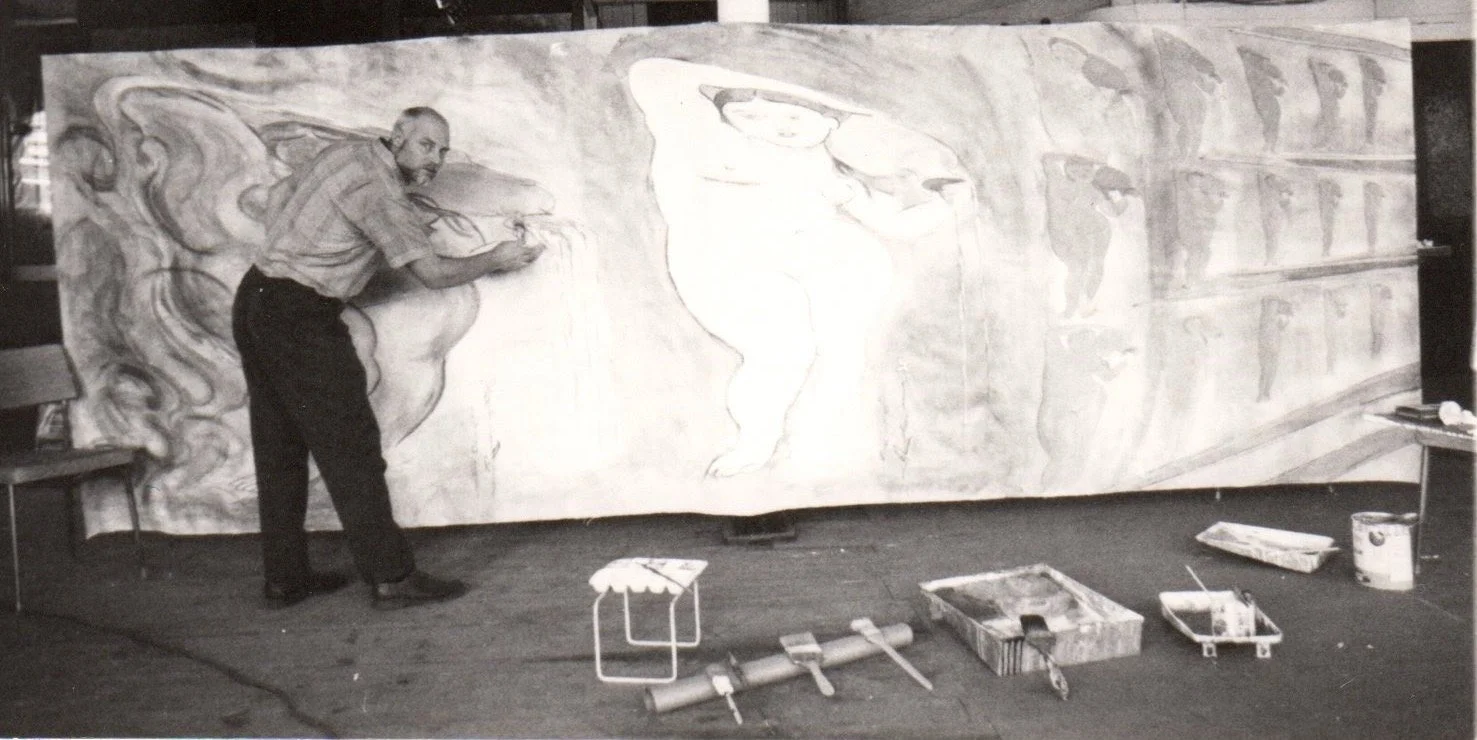
Hans Zandvoort La Source, date unknown
at work in Rochester, New York
Hans Zandvoort (1928–2013) was a Dutch artist whose career developed across Europe, Africa and North America. Born in The Hague, he moved to Paris in 1956, where his early work responded to the rapidly changing visual culture of the postwar years. Among the most distinctive surviving works from this period are his Spoutnik paintings and drawings, made in the wake of the first satellite launches.
Zandvoort later lived on the island of Gorée in Senegal and in New York before joining Rochester Institute of Technology, where he taught about art for more than two decades. Throughout his career, his painting continued to develop through successive bodies of work, from the figurative and space-inflected imagery of his Paris years to the Opposition and Anamorphic works of his later practice in Mexico.
The Hague
1928—1956
Hans Zandvoort was born Johannes Wilhelmus Zandvoort in The Hague in 1928. He studied at the Royal Academy of Fine Arts in The Hague and later worked in the educational department of the city’s museum of modern art. He was awarded a two-year French government scholarship, which brought him to Paris in 1956 to continue his studies at the École des Beaux-Arts.
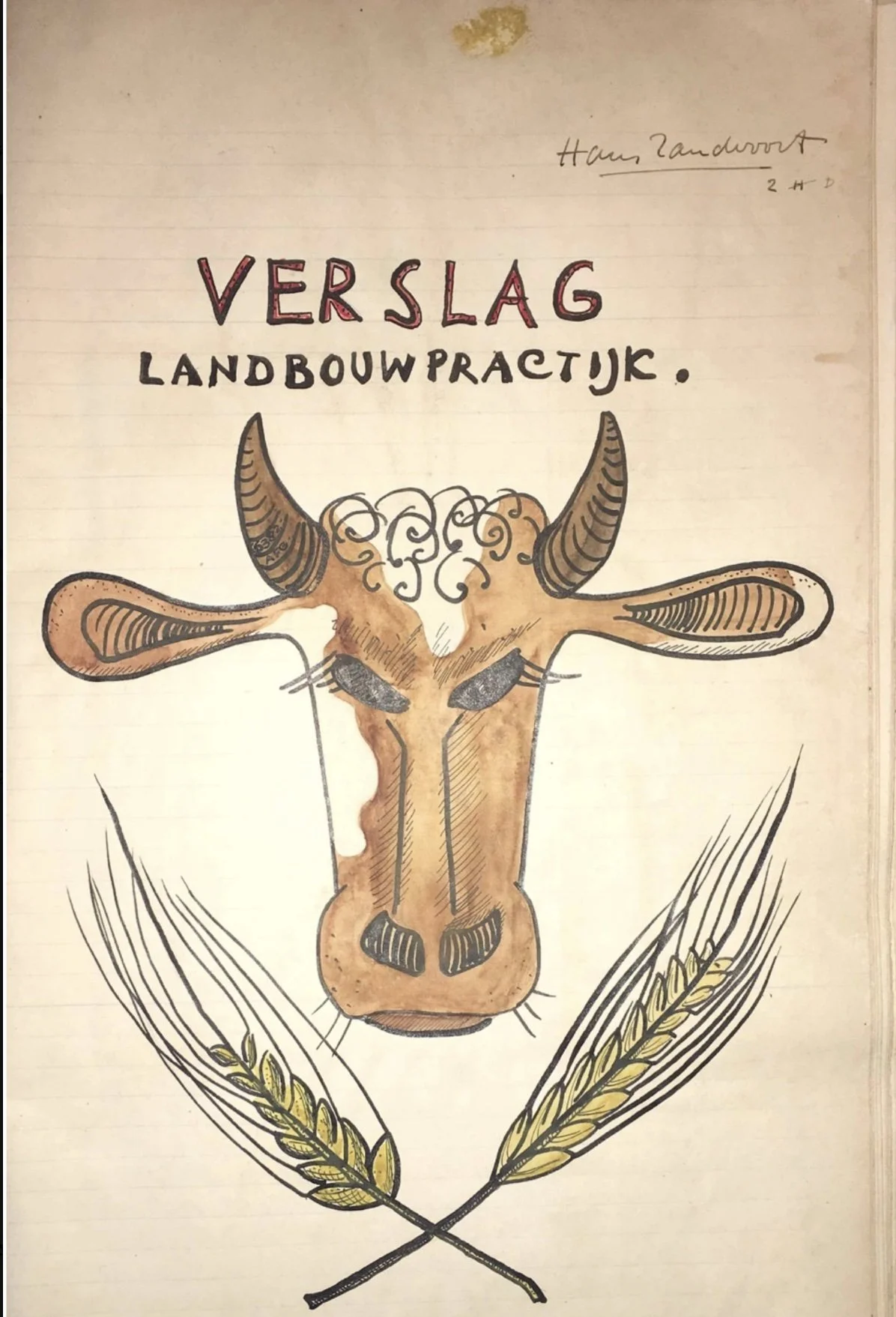
Hans Zandvoort, 1950
Illustrated agricultural-practice report
Paris
1956–1965
Zandvoort moved to Paris in 1956 on a two-year French government scholarship. He established a studio at 11 rue des Beaux-Arts and became part of the artistic life of the city.
In Paris he met Paule Jacques, whom he married in 1960. Their son Marc was born there in 1964. During these years Zandvoort developed his Spoutnik works and began exhibiting in Paris and the Netherlands.
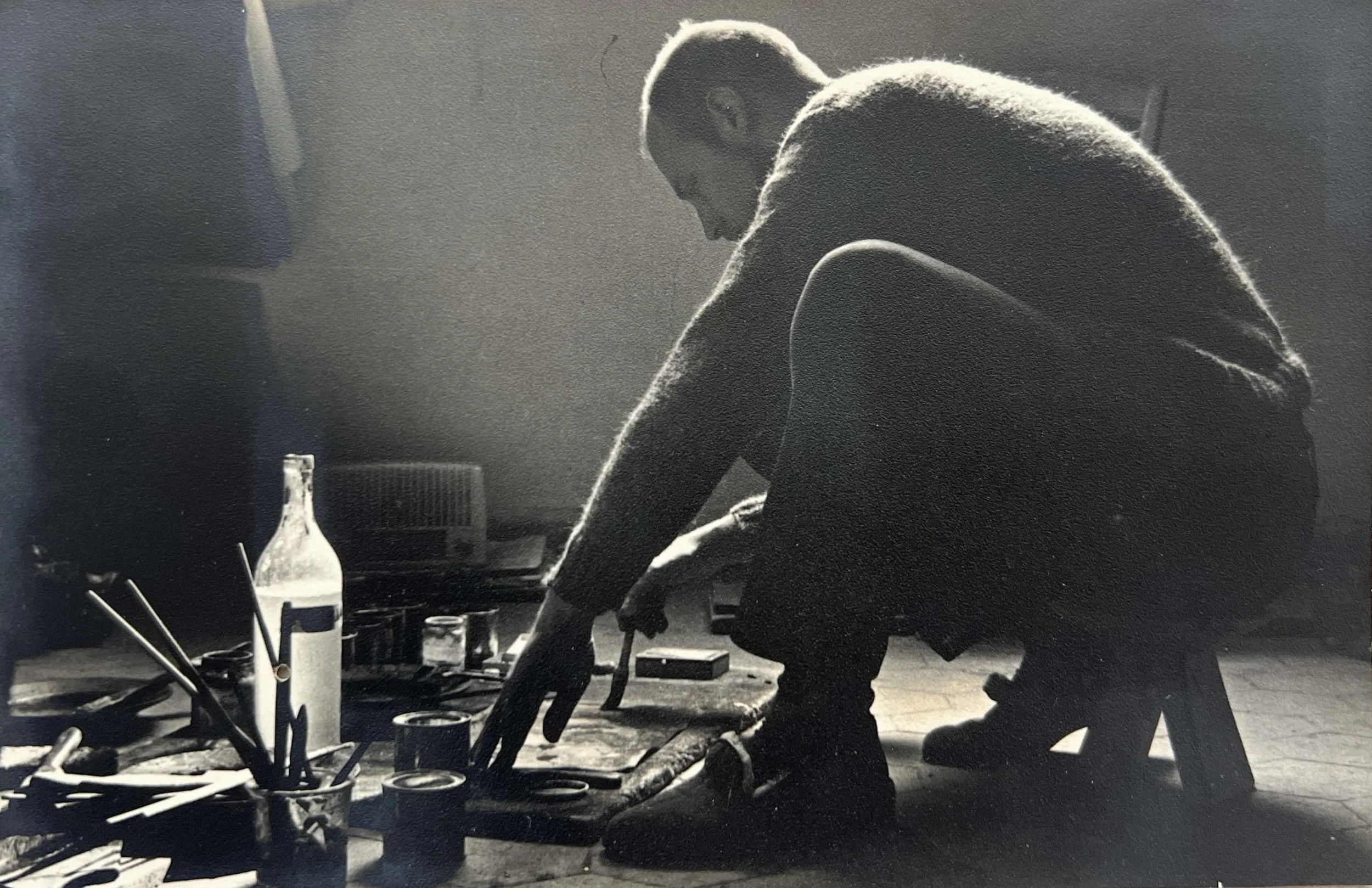
Sara Facio
Creación, from the series Primeros Premios, 1961
Hans Zandvoort
Spoutnik
1957–1958
Following the launch of Sputnik in October 1957, Zandvoort developed a group of paintings and drawings around satellites, rockets and the imagery of the emerging Space Age. He called these works Spoutnik. The theme also appeared in his drawings and graphic work, including a 1958 Le Figaro cartoon responding to Sputnik and Laika.
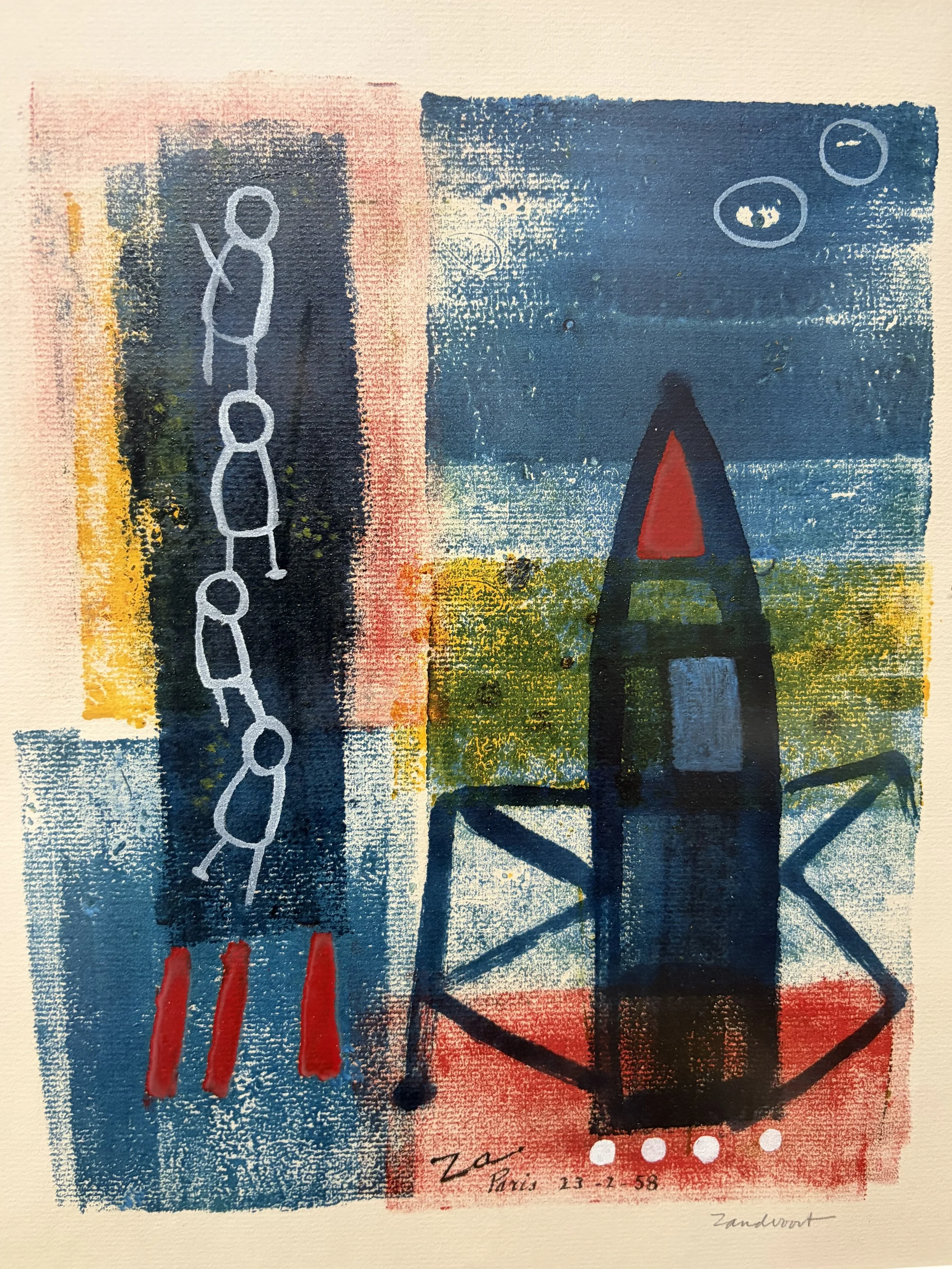
Hans Zandvoort, Untitled, 1958-02-23
Acrylic on paper
21×30 cm
Early Exhibitions
1958–1961
In 1958, Zandvoort began exhibiting his work in Paris and the Netherlands. In Paris, he showed at Galerie du Haut-Pavé and participated in the Salon des Surindépendants. Later that year, exhibitions in Amsterdam and The Hague brought his work before Dutch audiences. Contemporary critics described his work as semi-figurative or surrealist-abstract, noting simplified figures and recurring motifs.
In May 1961, Zandvoort participated in Les 41 présentent Iris Clert dans sa nouvelle galerie, a group exhibition marking the opening of Iris Clert’s new gallery in Paris. Forty-one artists were invited to present portraits of the gallerist.
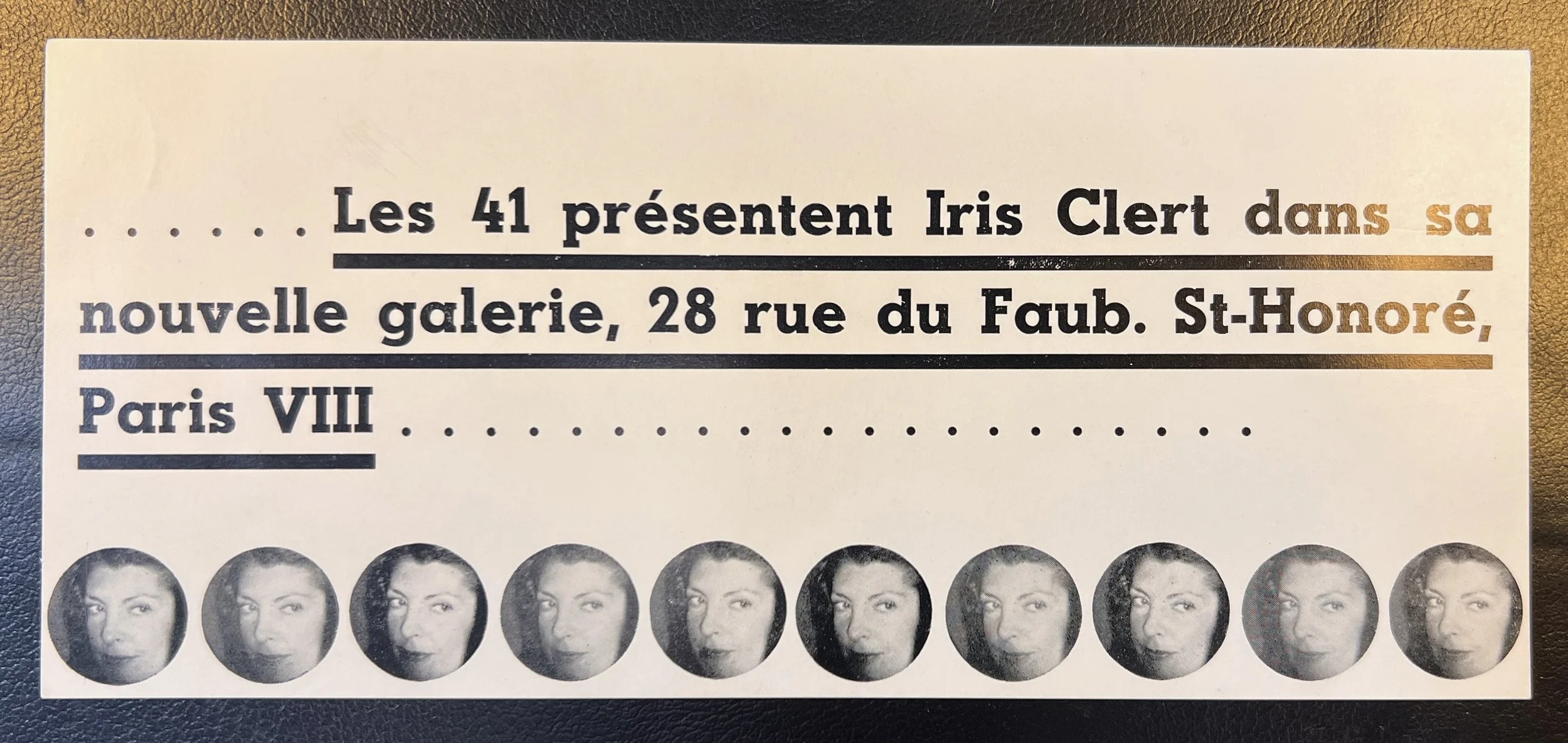
Invitation to Les 41 présentent Iris Clert dans sa nouvelle galerie, 1961
Galerie Iris Clert, Paris
Bibliothèque nationale de France
Opposition
Early 1960s
Following the Spoutnik works, Zandvoort developed a body of increasingly abstract paintings that he called Opposition. The works move away from recognizable imagery toward contrasting fields of color, gestural lines and concentrated forms.
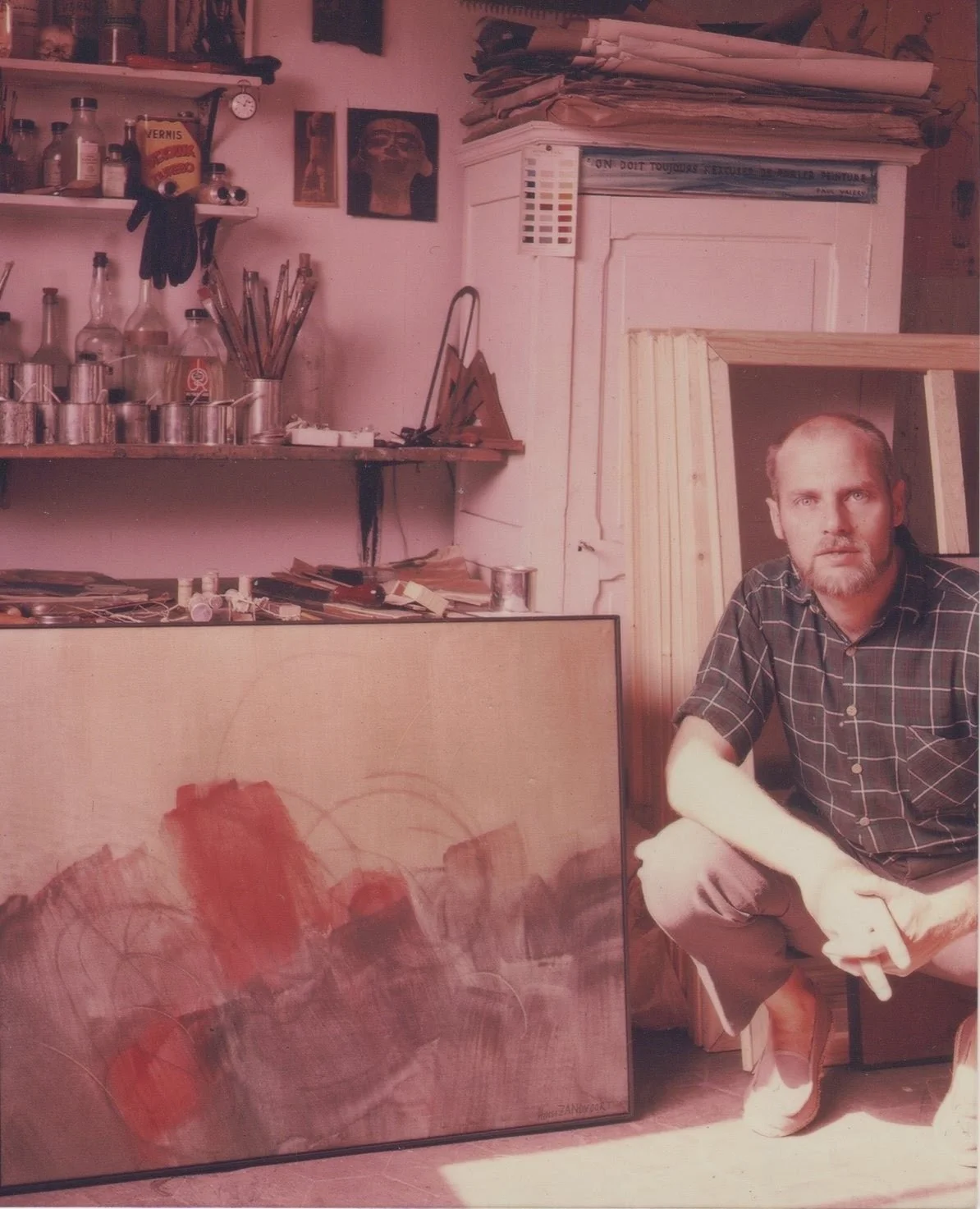
Hans Zandvoort in his studio, Paris, c. 1962.
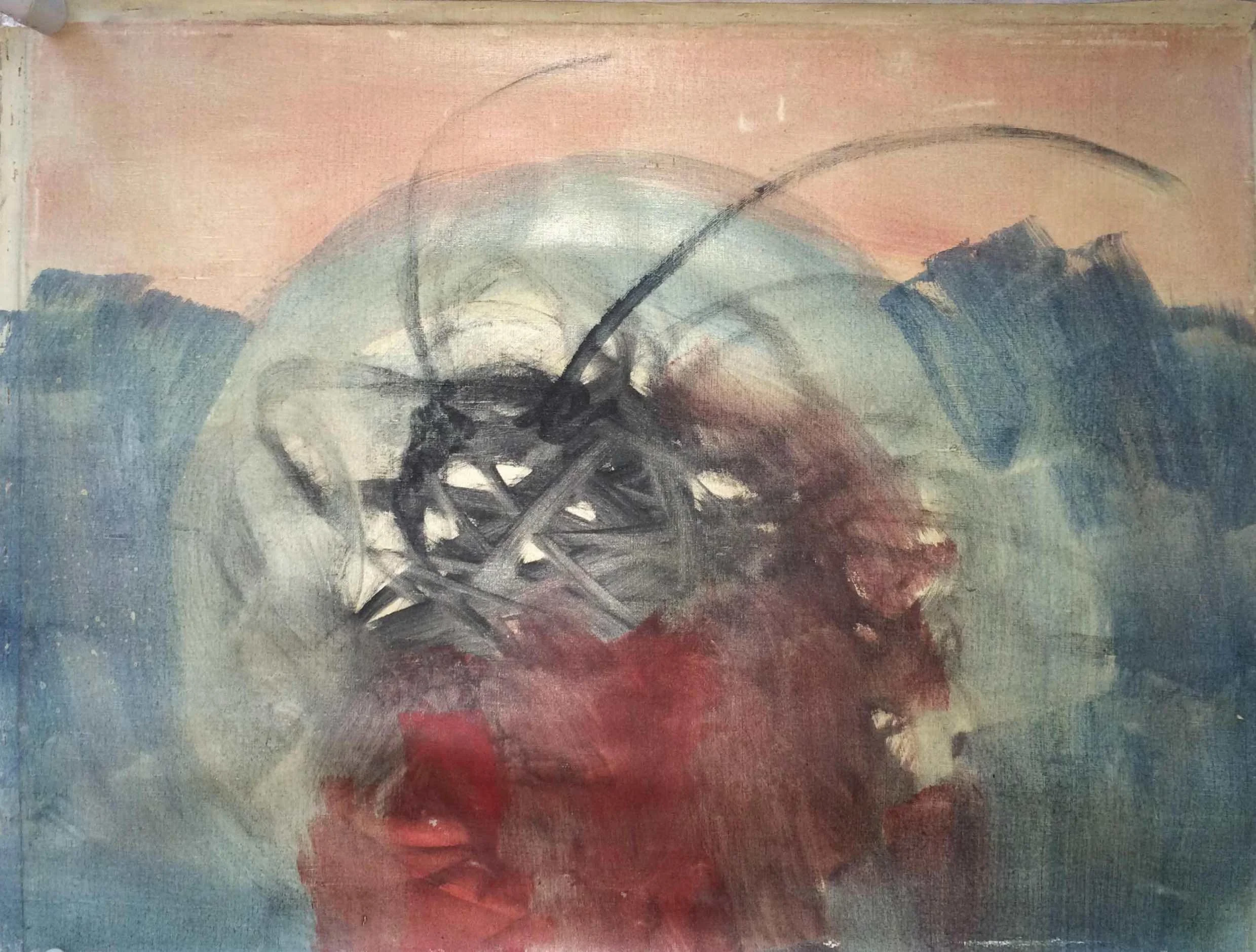
Hans Zandvoort
early 1960s
Acrylic on canvas
Gorée, Senegal
1965–1966
In 1965, Hans and Paule Zandvoort moved with their young son Marc to the island of Gorée, Senegal, where Paule’s mother, Mireille Jacques, had established Poupées de Gorée. The family lived on the island until 1966.
During this period, Hans collected African art and attended the First World Festival of Negro Arts in Dakar in 1966. Several years later, works from his collection were exhibited at Rochester Institute of Technology.
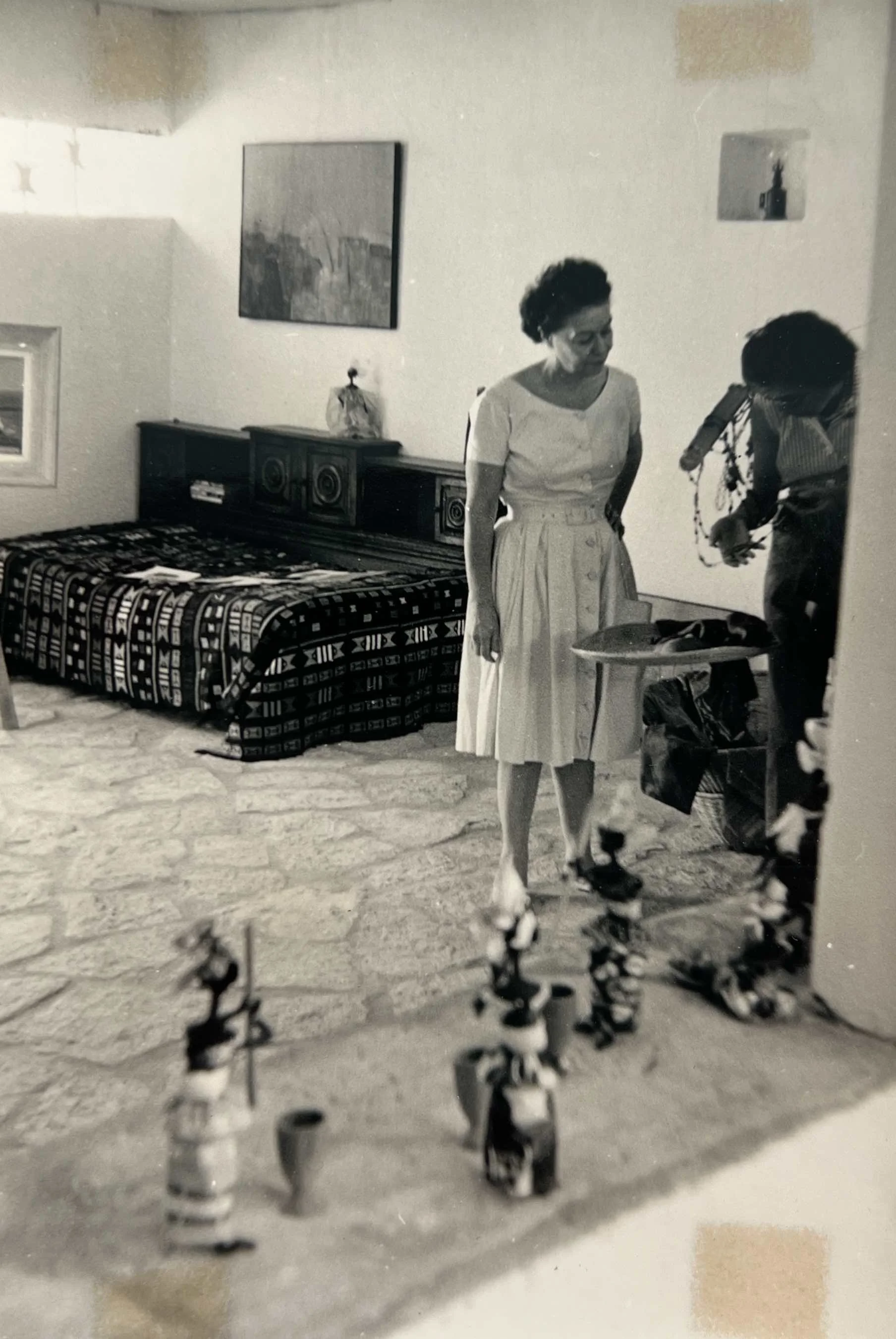
Poupées de Gorée, Gorée, Senegal, c. 1965–66
Mireille Jacques in her shop, with a painting by Hans Zandvoort visible on the wall.
United States
1967–1970
After leaving Gorée, Hans and Paule moved to the United States, living first in New York City before moving to Illinois. Hans taught at Northern Illinois University in DeKalb, where their daughter Anne was born in 1968.
In 1970, the family moved to Rochester, New York, where Hans joined the faculty of Rochester Institute of Technology. Rochester would remain their home for more than two decades.
Rochester
1970–1991
Hans joined the faculty of Rochester Institute of Technology where he taught undergraduate and graduate courses in fine arts and art history. He was granted tenure in 1974, and continued teaching at RIT for more than two decades.
Alongside his academic career, Zandvoort continued to paint and maintained studios in Rochester. In 1991, he left his professorship to return to working full-time as a painter and photographer and was named Professor Emeritus.
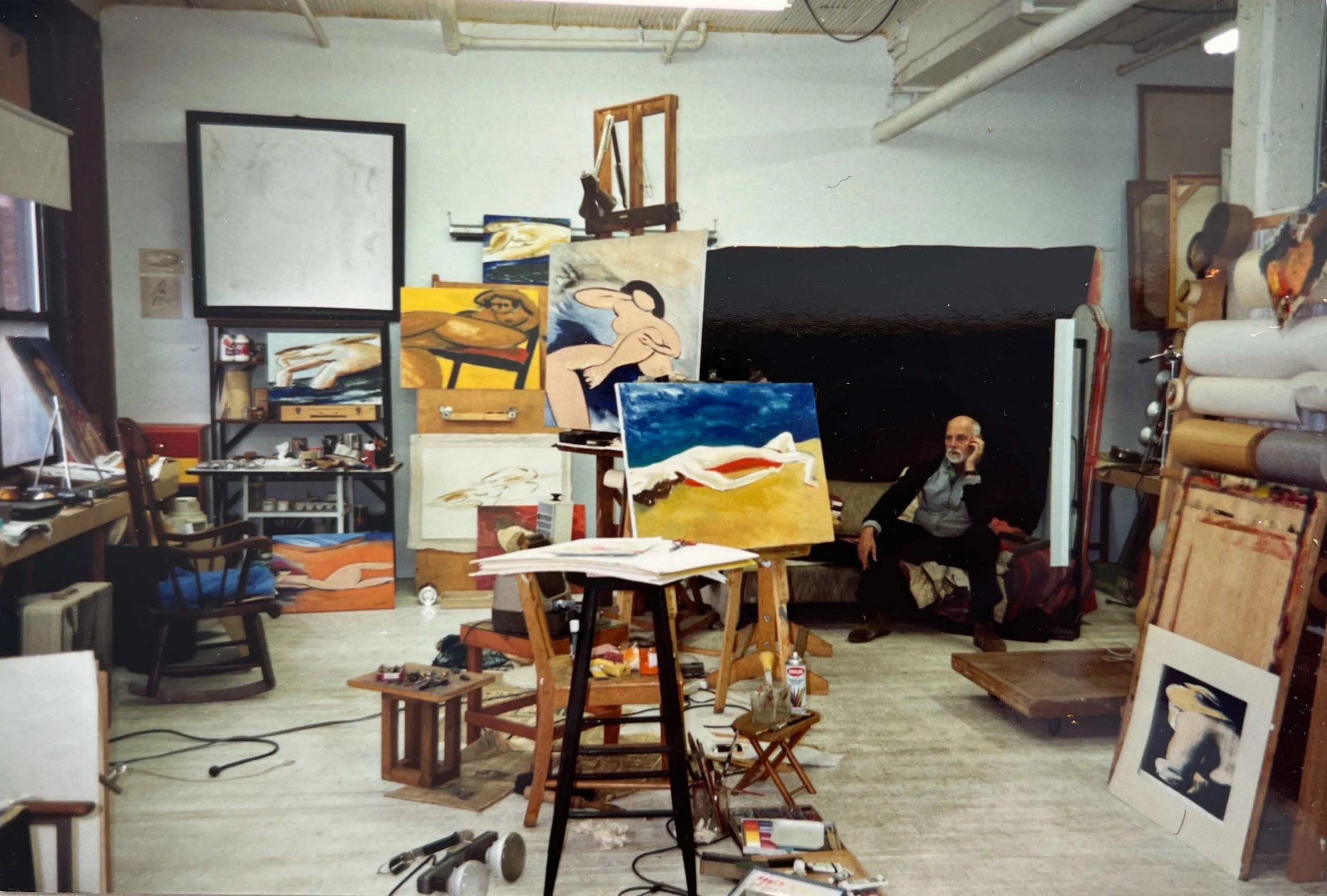
Hans Zandvoort in his studio, Rochester, New York, 1990
Corning, New York
1991–1997
After leaving RIT in 1991, Zandvoort moved to Corning, New York, where he returned to working full-time as an artist. He established a studio and gallery there, continuing to paint before moving to Mexico in 1997.
Mexico
1997–2013
In 1997, Zandvoort left New York for Mexico. He first lived by the sea in Cancún before moving to the village of Puerto Morelos, where he bought land and established a home. He later moved to El Jobo, Chiapas.
Throughout these years he continued to paint and exhibit, further developing the anamorphic approach that became central to his later work. He described these paintings as “neo-anamorphic,” exploring the shifting relationship between abstraction and recognizable imagery as the viewer changes position.
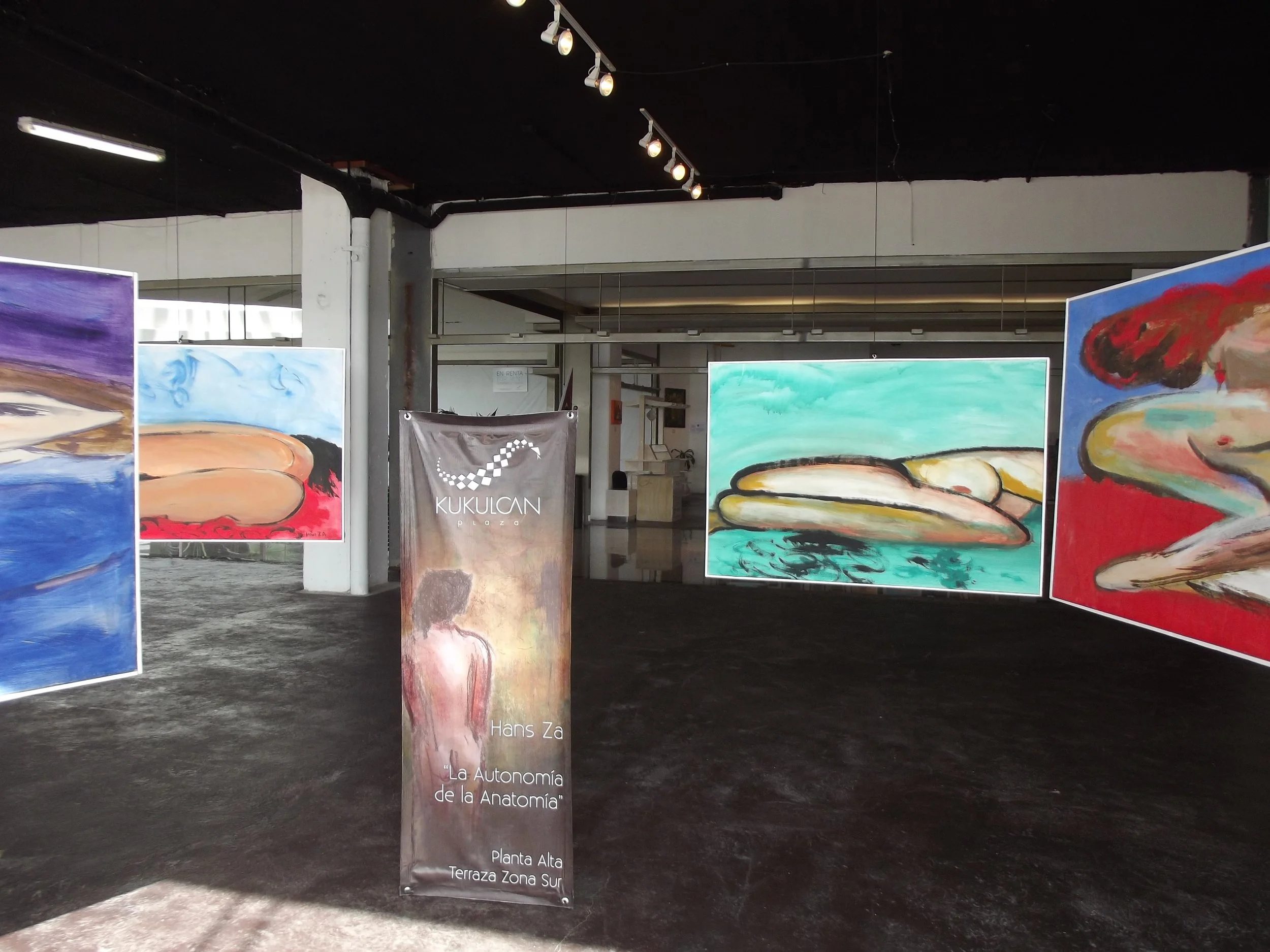
Hans Zandvoort, La Autonomía de la Anatomía, 2012
Kukulcán Plaza, Cancún, Mexico
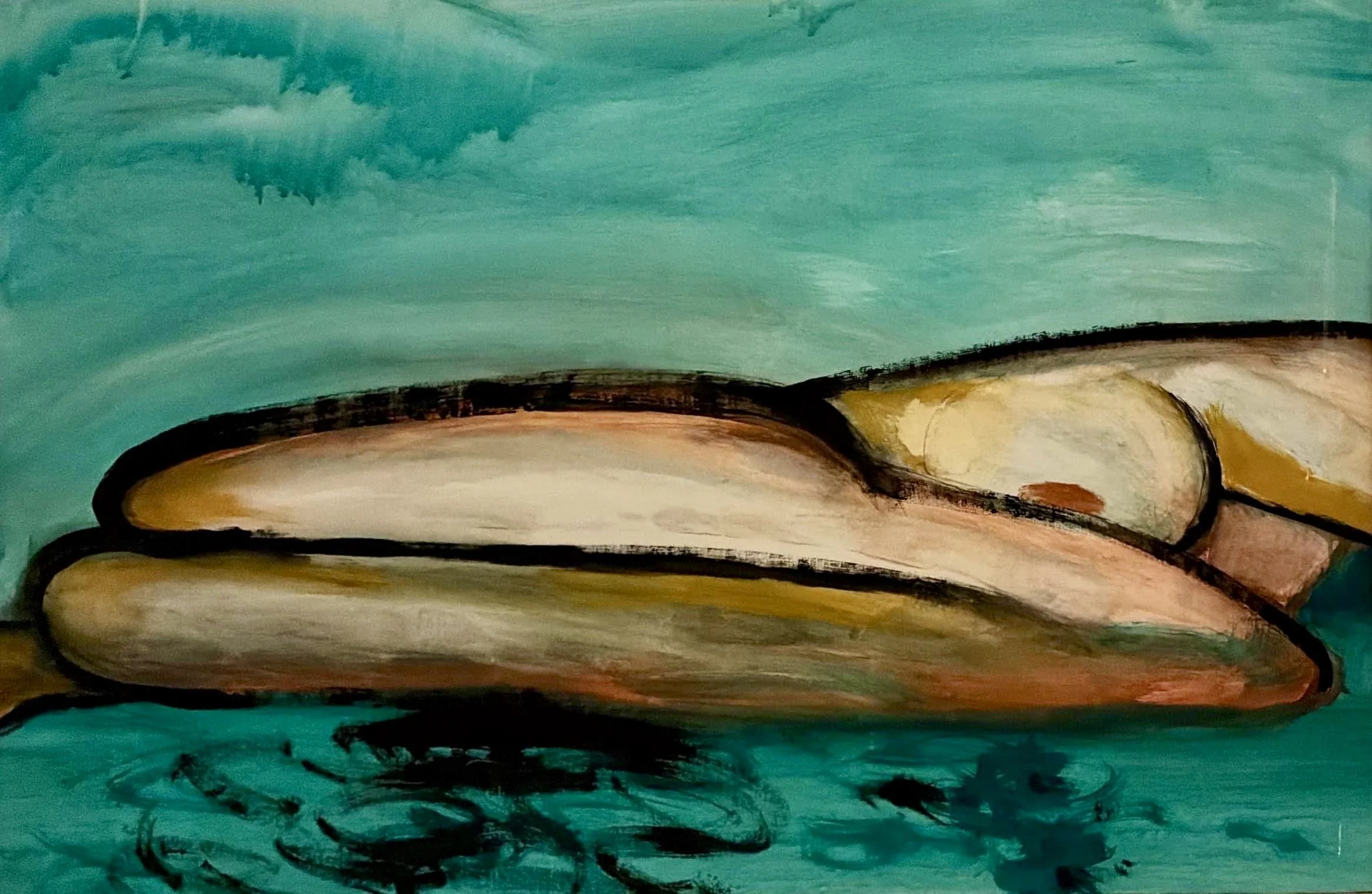
Hans Zandvoort
2012
Acrylic on canvas
Anamorphic
In his later work, Zandvoort explored anamorphosis as a way of bringing abstraction and recognizable imagery into the same painting. A work might appear largely abstract from the front, while recognizable forms emerge when viewed from an angle.
“Painters never retire.”
“I think in my case, it is the older I get, the better my work becomes. Painters never retire.”
— Hans Zandvoort, 2012