SPOUTNIK
Spoutnik and the Space Race
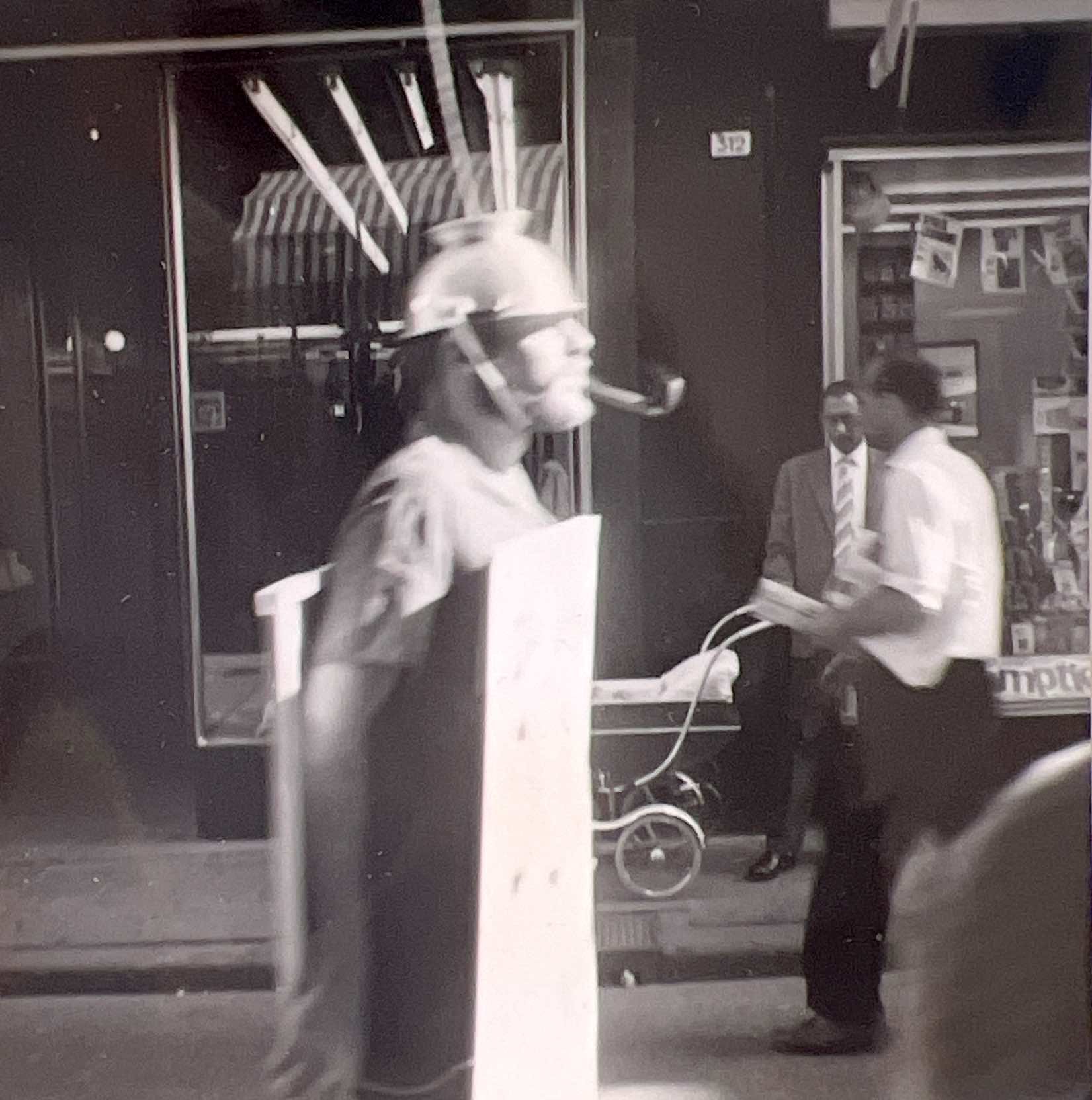
Hans Zandvoort wearing a Spoutnik headdress and carrying a sign reading “De Poëzie van de Ruimte” (The Poetry of Space), Dordrecht, September 1961
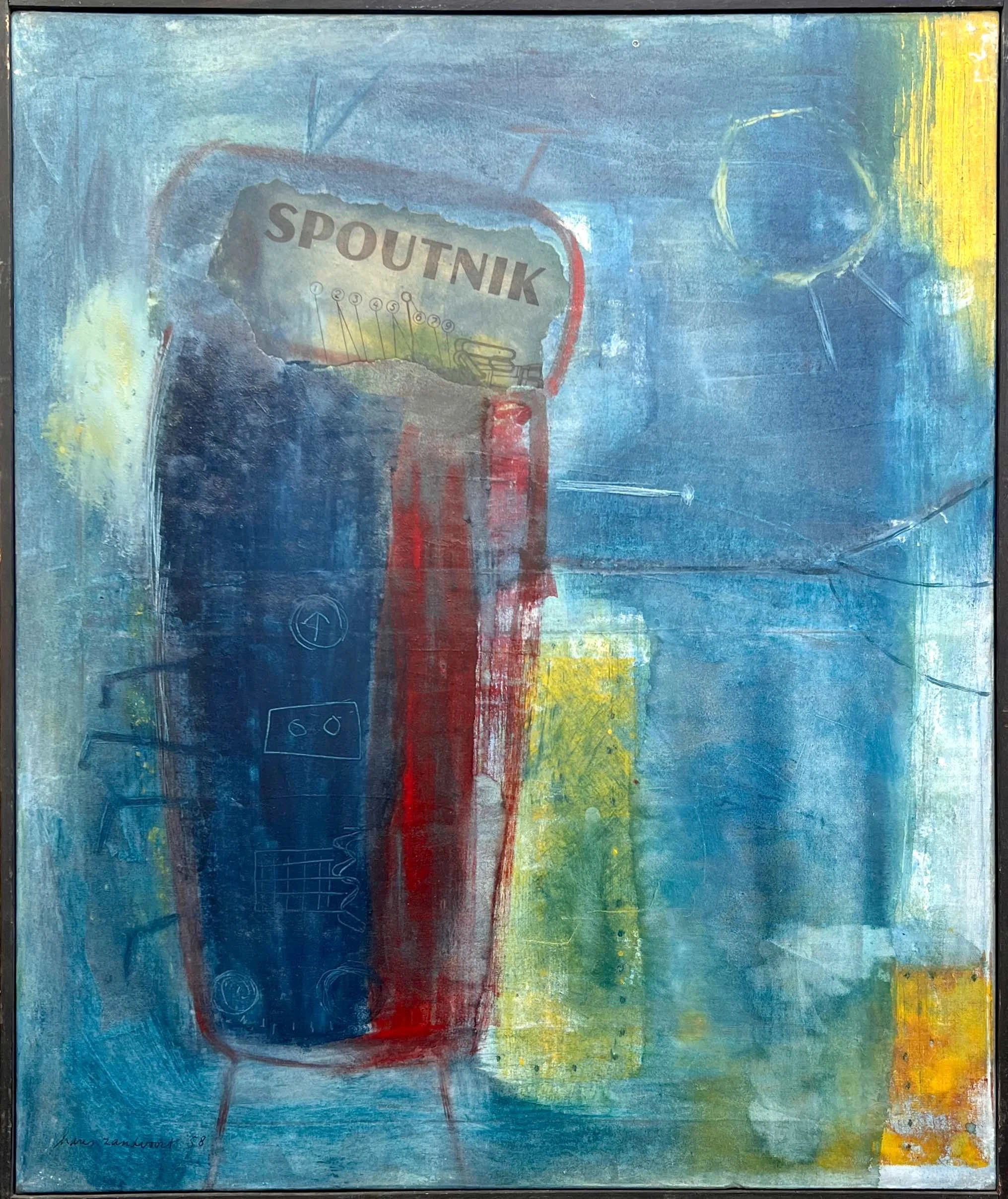
Hans Zandvoort
Spoutnik, 1958
Acrylic and collage on canvas
66 × 56 cm
Following the launch of Sputnik 1 in October 1957, satellites, antennae and capsule-like forms appear repeatedly in Zandvoort’s work of the period.
In paintings and works on paper from this period, circular forms, projecting antennae and enclosed structures recur in increasingly varied configurations. In one major painting, Zandvoort incorporated the word SPOUTNIK directly into the work.
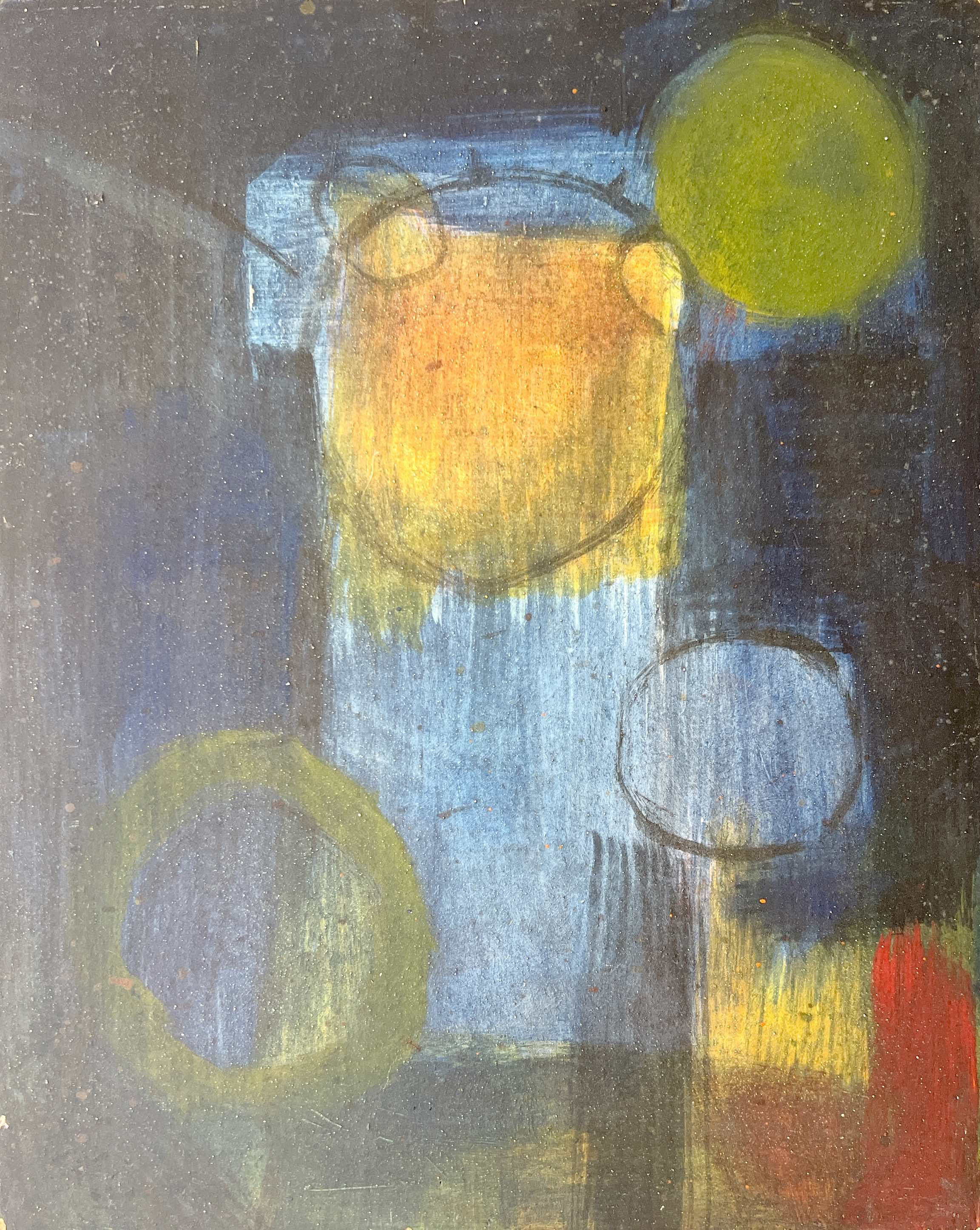
Hans Zandvoort
1960
Acrylic on wood
41 × 33 cm
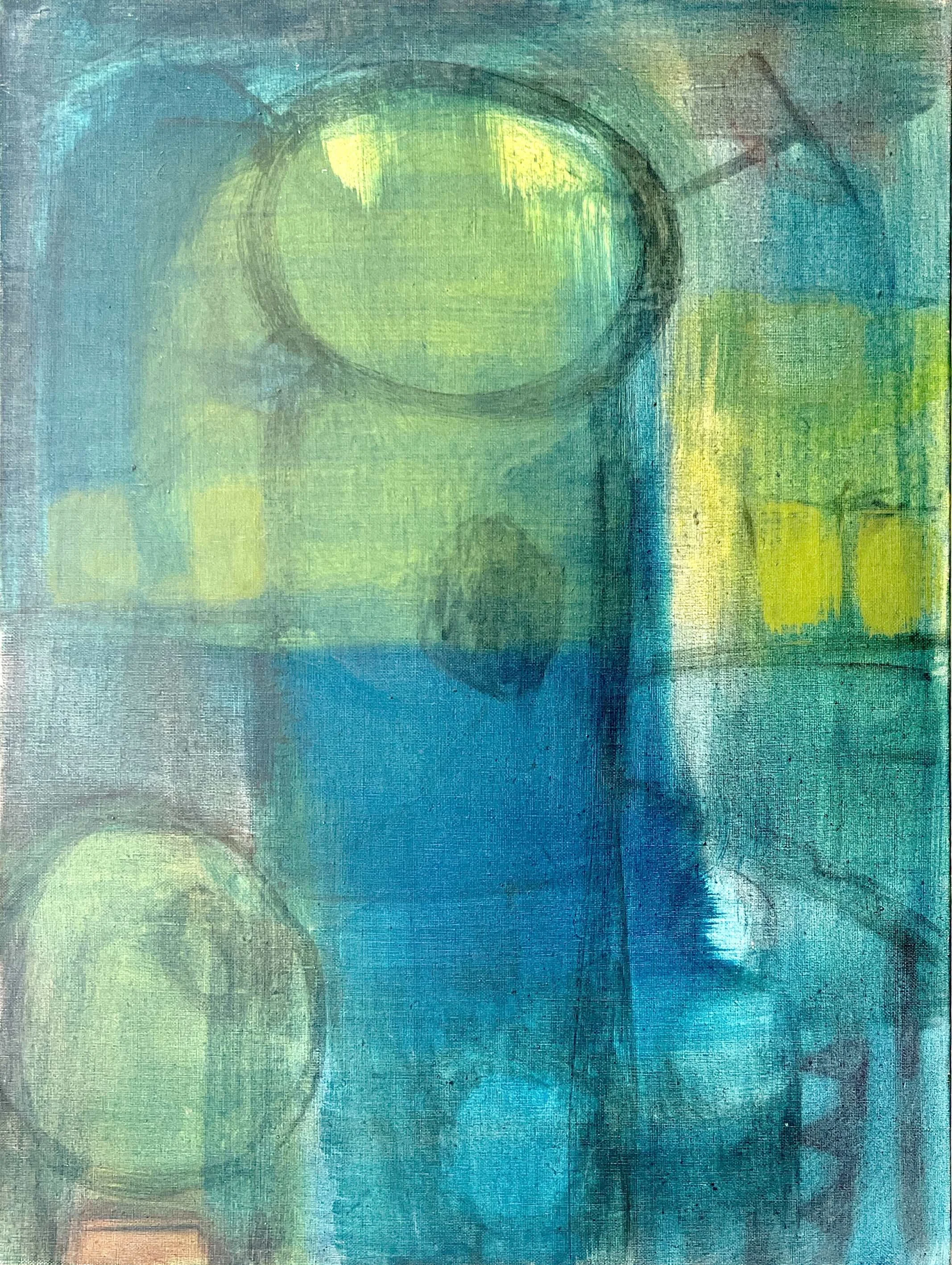
Hans Zandvoort
1960
Acrylic on canvas
61 × 46 cm
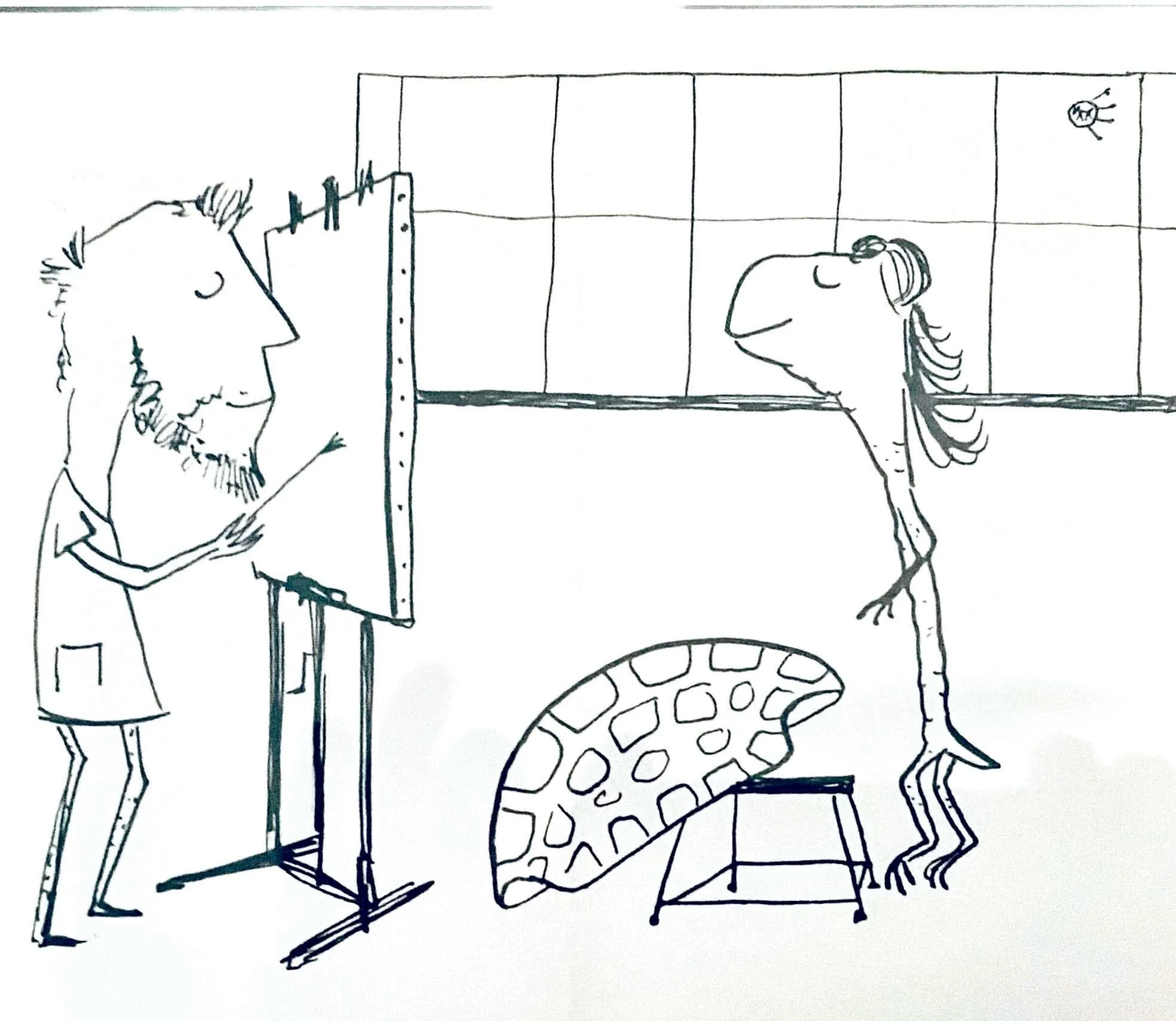
Hans Zandvoort
Self-portrait with satellite
Ink on paper
SELF PORTRAIT
In this undated self-portrait, Zandvoort depicts himself painting a nude model while a tiny satellite carrying a dog passes outside the window. The drawing brings the imagery of Sputnik and Laika into an everyday studio scene.
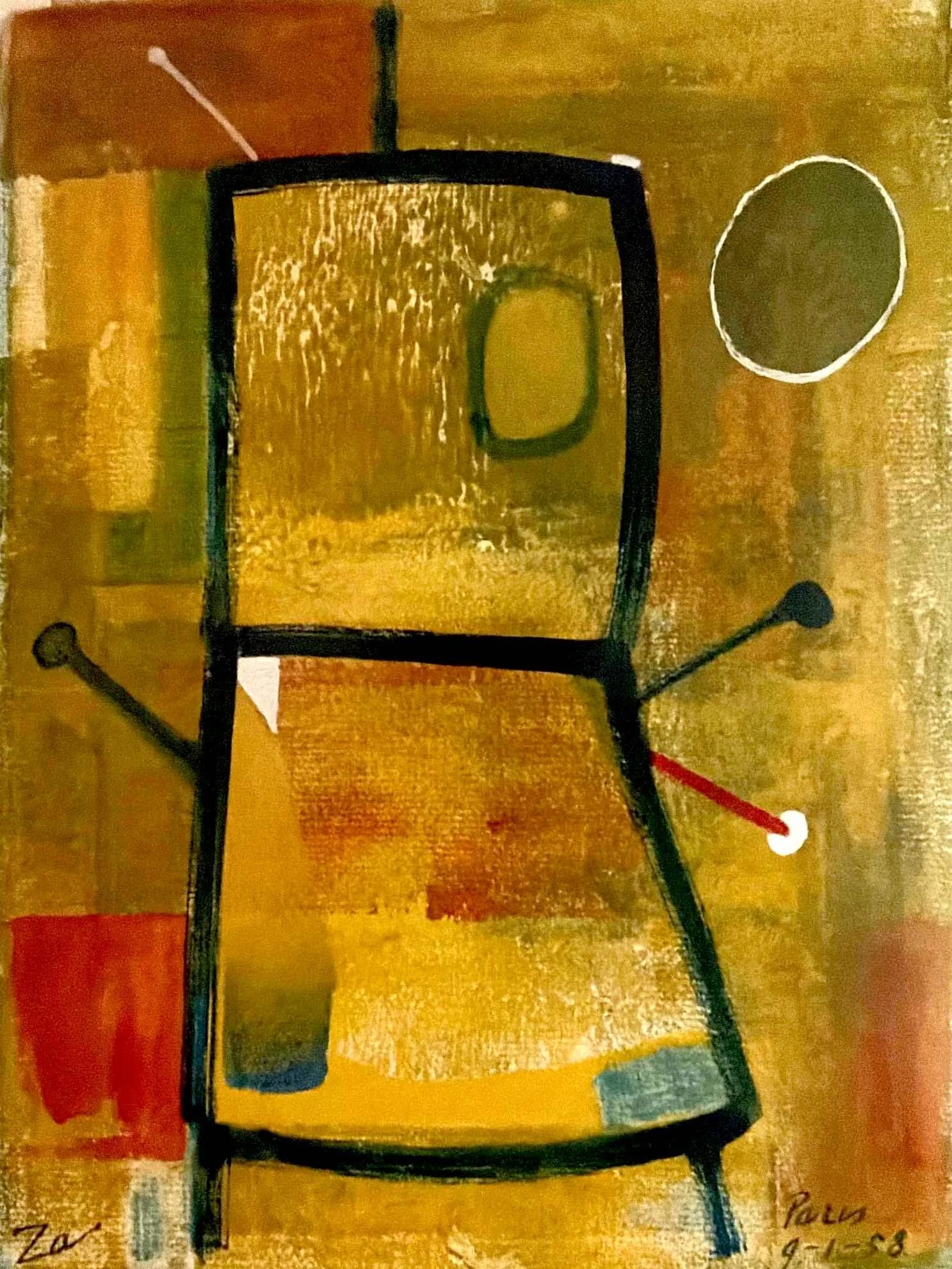
Hans Zandvoort
1958
Acrylic on paper
30 × 40 cm
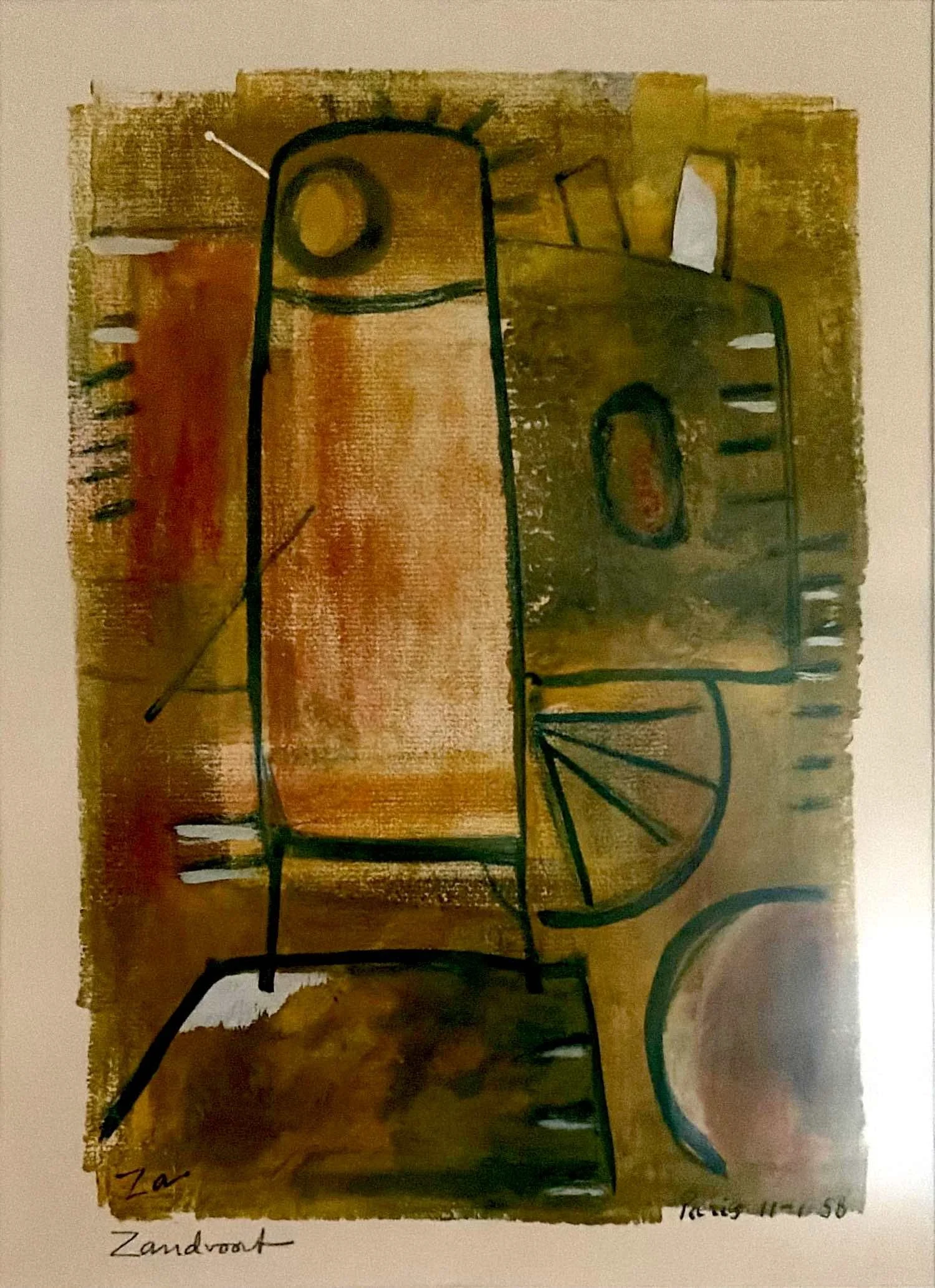
Hans Zandvoort
1958
Acrylic on paper
30 × 40 cm
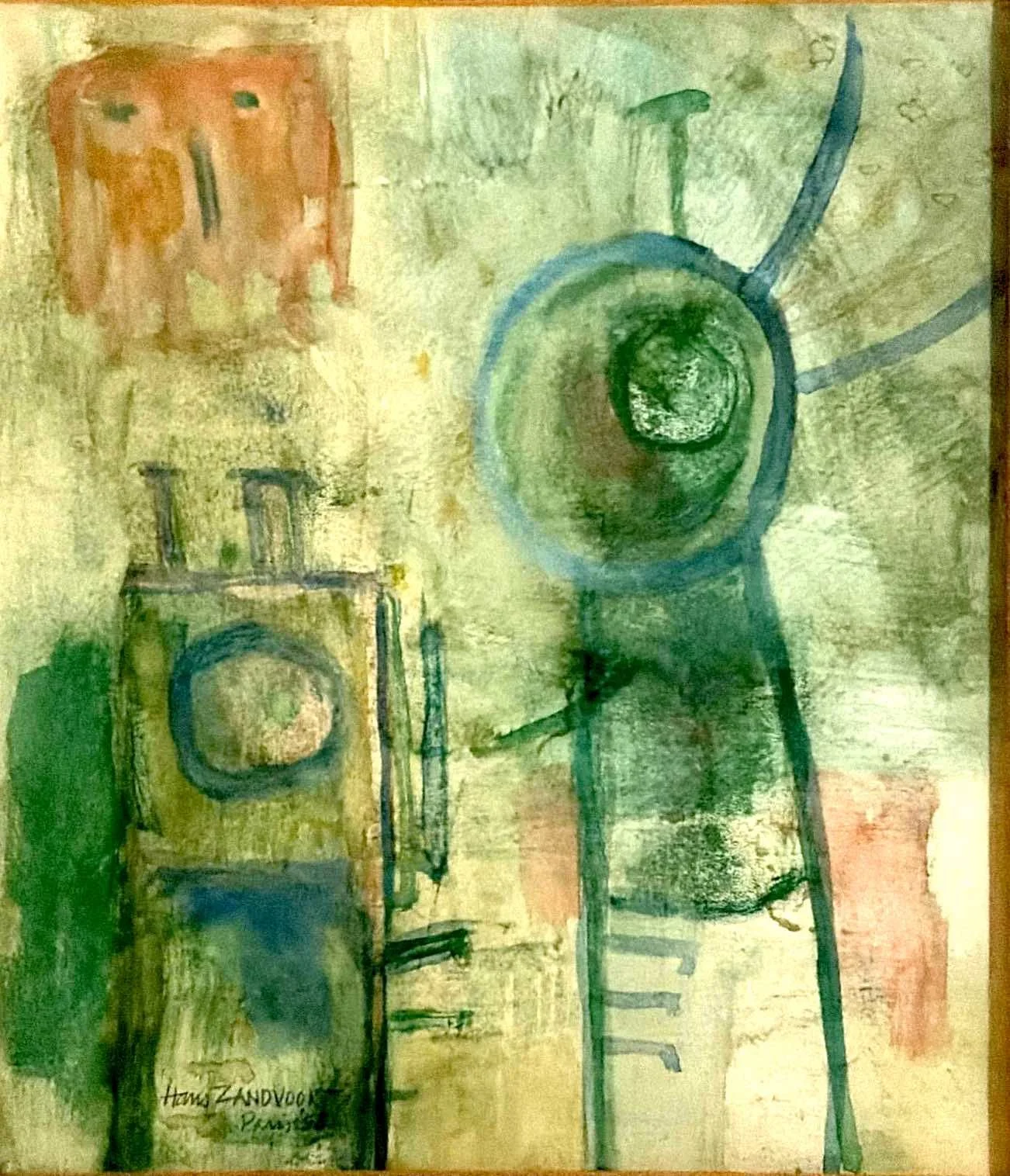
Hans Zandvoort
1958
Acrylic on paper
20 × 30 cm
In February 1958, Zandvoort’s cartoon Sans légende appeared in Le Figaro, a satirical response to the fate of Laika, the dog launched aboard Sputnik 2.
The cartoon contrasts a Soviet satellite carrying Laika with an American satellite carrying a bone. The surviving newspaper clipping was preserved among his papers.
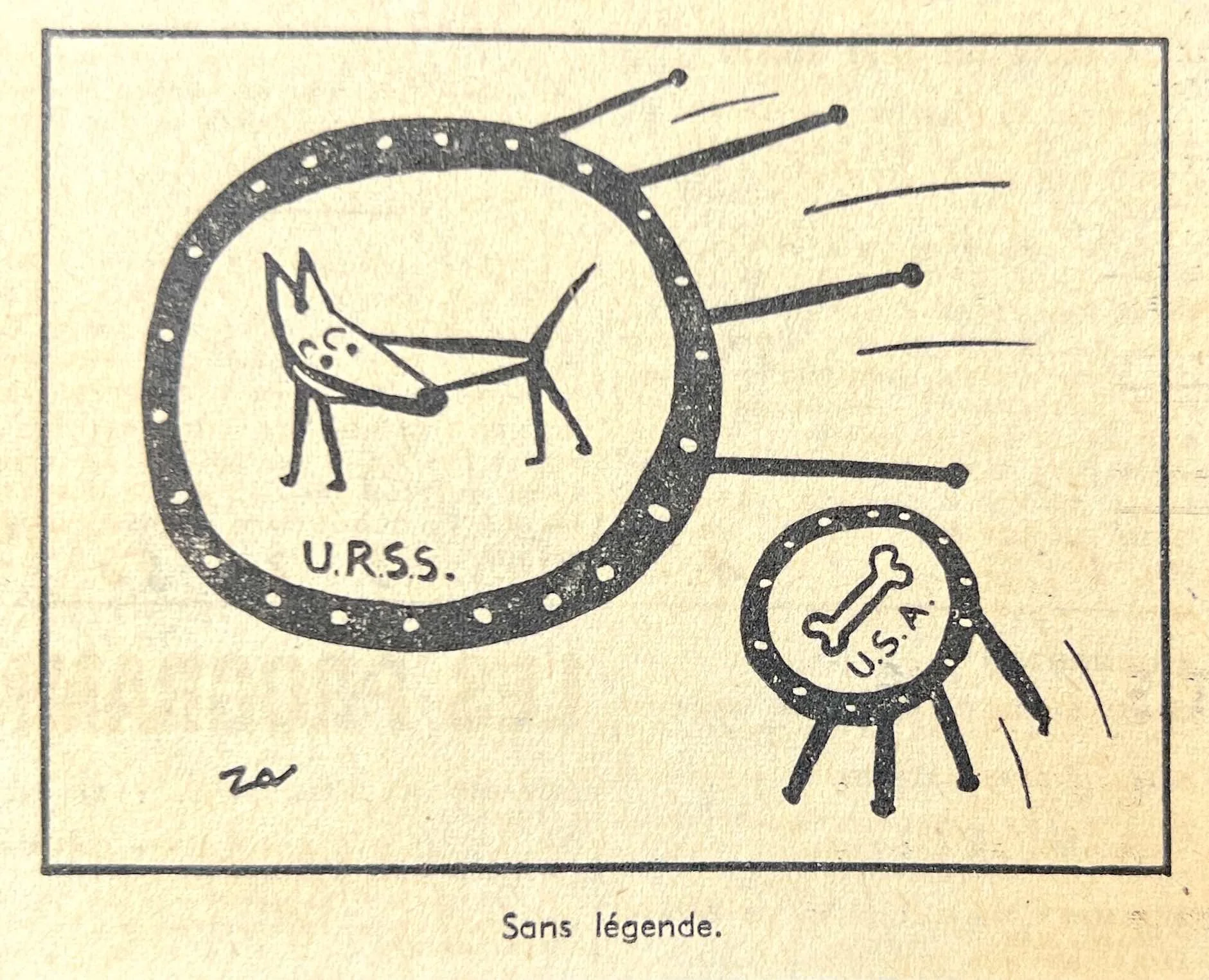
Hans Zandvoort
Sans légende, 1958
Newspaper clipping
8 × 10 cm
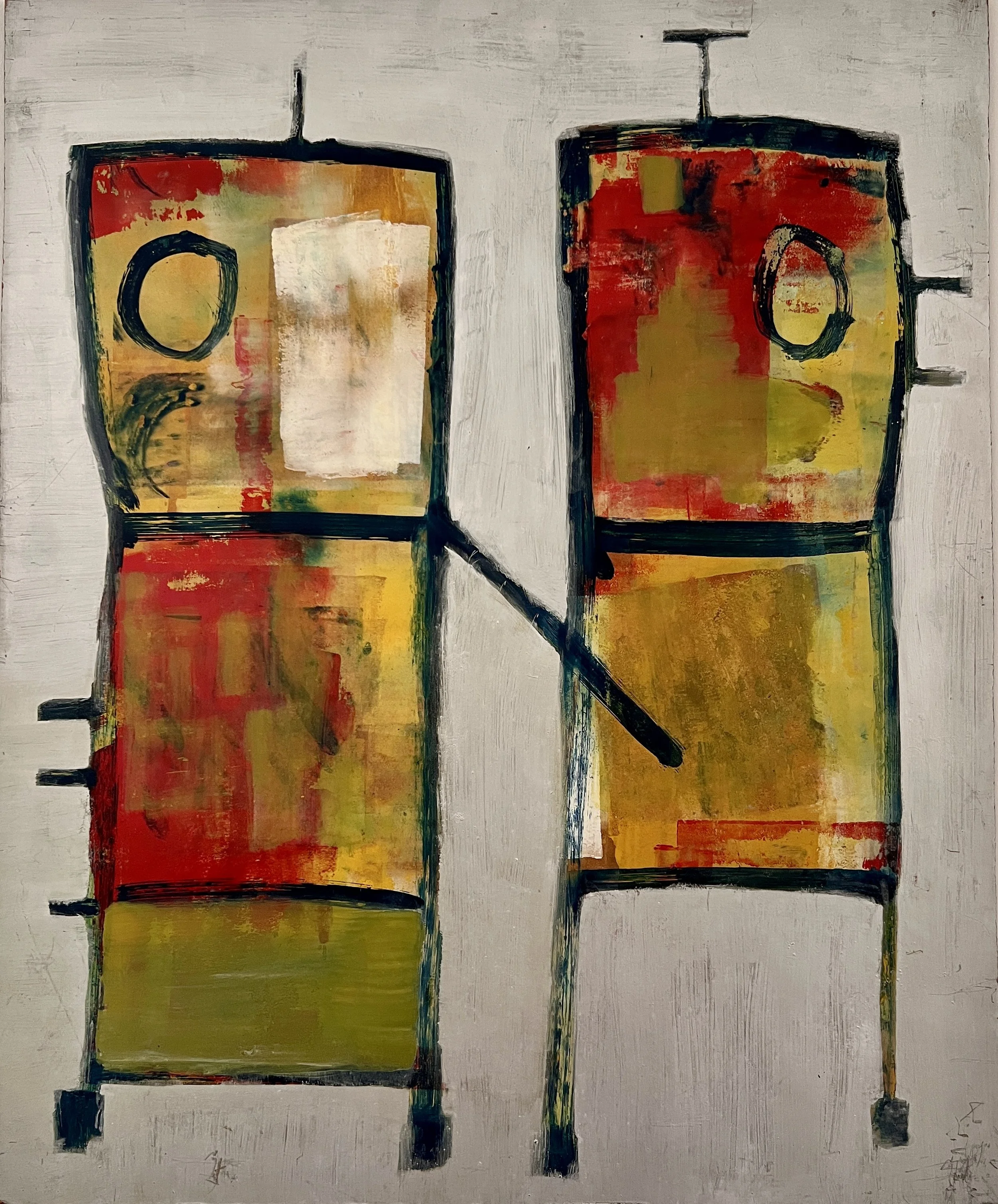
Hans Zandvoort
Acrylic and metallic paint on hardboard
61 × 50 cm
Spoutnik was one of the first distinct bodies of work Zandvoort developed in Paris. Created in the years following the launch of Sputnik, the surviving paintings, drawings and archival material document his engagement with satellites, rockets and the new visual language of the Space Age.
By the early 1960s, the recognizable imagery of the Spoutnik works began to give way to increasingly abstract forms. Zandvoort called the body of work that followed Opposition.